




When I used to think about medical preparedness after a disaster, my mind went to the worst things first.
Major trauma. Serious bleeding. Broken bones. The kinds of injuries that make you want a medical kit that looks like it belongs in an ambulance.
Those injuries can happen, and I still believe a prepared family should know how to respond to them. But while going through Survival MD: How to Survive When There’s No Doctor, I found a section that changed the way I think about the medical shelf in my own home.
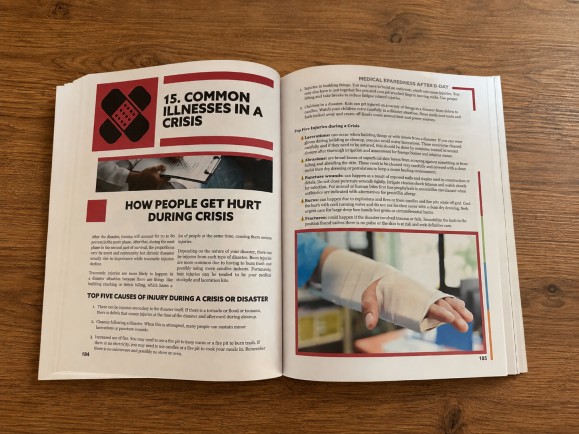
Chapter 15 asks a very practical question: how are people actually likely to get hurt during and after a disaster?
The answers are much more ordinary than I expected.
People cut themselves clearing debris. They step on exposed nails. They burn themselves using candles or improvised cooking fires. They crush fingers while moving rocks or building temporary structures. Children get hurt because a familiar home suddenly becomes full of unfamiliar hazards.
That made sense to me immediately.
The storm may last one night. The cleanup can last for weeks.
1. The Disaster Creates The First Injuries
The first group of injuries comes from the event itself.
Tornadoes throw debris. Floods damage buildings. Walls collapse. Windows break. Roofing comes loose. Trees fall.
Afterward, an ordinary neighborhood can look completely different.
A piece of lumber that used to be part of a wall may now have nails sticking out of it. Sheet metal can become a sharp edge. Broken glass may be buried under insulation or mud. Furniture can be unstable. Tree limbs can be hanging under tension.
I would never walk into that environment the same way I walk around my yard on a normal Saturday.
Heavy gloves, sturdy boots, eye protection, long pants, and decent lighting start looking a lot more important once you picture the actual cleanup.
That is medical preparedness before the injury happens.
2. Cleanup May Be The Bigger Risk
This was probably the part that made me rethink my own priorities the most.
Once the immediate danger passes, people start working.
They move broken furniture. Drag branches. Pull apart damaged lumber. Climb ladders. Handle glass. Clear rooms. Patch roofs. Carry heavy objects. Use tools they may not normally use.
And they do all of it while tired.
Fatigue makes ordinary work dangerous. I know that from normal projects around the house. After several hours, I become less patient. I start rushing. My footing gets sloppy. I stop paying as much attention to where my hands are.
Now add darkness, stress, damaged buildings, poor sleep, and limited medical help.
A small cut suddenly matters more because clean water may be limited. A puncture wound matters more because the nail may have been sitting in dirty flood debris. A twisted ankle becomes a serious problem if that person was the one carrying water for the family.
That is why I would build a disaster medical kit around the injuries I expect to see repeatedly, not only the rare dramatic ones.
3. Fire Comes Back Into Daily Life
Most of us live around very little open flame.
We flip a switch for light. We turn a dial to cook. We use central heat. Trash disappears every week without us thinking about it.
A long power outage changes that.
People start using candles. Fire pits become cooking stations. Wood fires provide warmth. Camp stoves come out. Trash may be burned where local rules and conditions allow it.
Suddenly, flame is part of daily life again.
That creates burn injuries that had nothing to do with the original disaster.
A child reaches toward a candle. Someone grabs a hot pan without thinking. A pot of boiling water tips. Loose clothing gets too close to a flame. Somebody tries to move a fire pit or hot metal before it has cooled.
These incidents are painfully easy to imagine because they do not require recklessness. They only require one tired person making one bad move.
If I expect to use alternative heat or cooking during an outage, I want the burn supplies and safety rules ready before the lights go out.
4. We May Have To Build Things We Never Normally Build
One example in Survival MD that stayed with me was the outhouse.
If normal sanitation stops working, families may suddenly have to build temporary toilets, fire pits, shelters, wash stations, barriers, or storage areas.
That means construction work.
Many of us are capable of basic projects, but we do not spend every day lifting rocks, swinging hammers, cutting lumber, digging holes, or moving heavy materials.
That difference matters.
A person can crush a finger between stones, strain his back lifting something badly, fall from a ladder, or cut himself with a tool he rarely uses.
I would rather slow down and take breaks than turn one emergency into two.
Good lifting technique, gloves, proper footwear, eye protection, and a little patience may prevent more injuries than an expensive piece of medical gear.
5. Children Need Their Own Safety Plan
Children deserve special attention after a disaster because the environment changes around them.
A room that was safe yesterday may now contain glass. Tools may be left out because adults are working. Fuel cans may be nearby. Candles may replace electric lights. Generators may be running outside. Extension cords may cross walkways. Debris may surround the house.
Adults see a work site.
A child may still see home.
That is why I would create clear off-limits areas immediately. Children should know where they can play, where they can walk, and what they must stay away from.
Medicines, fuel, sharp tools, matches, and repair equipment need to stay secured even when everyone is busy.
I would much rather spend five minutes setting boundaries than spend the evening treating an injury that could have been prevented.
6. Cuts Are Probably Going To Be Common
Lacerations are easy to picture after a disaster.
Broken glass, metal, lumber, knives, tools, and debris are everywhere during cleanup. Even a small cut deserves attention when the environment is dirty.
What matters is more than the size of the wound.
- What caused it?
- Was the object dirty?
- Is there material inside the wound?
- Is bleeding controlled?
- Is tetanus protection current?
- Does the injury need professional treatment?
Those are the questions I want to be able to answer calmly.
This is also why I keep more basic wound supplies than I once thought I needed. One dramatic trauma kit may look impressive, but several people with ordinary cuts can use dressings quickly.
7. Puncture Wounds Deserve More Respect
Puncture wounds bother me because they can look so small.
A nail goes through a boot. A piece of wire catches a hand. A sharp piece of wood penetrates the skin.
The hole may be tiny, but contamination can be pushed deep into the tissue.
Damaged buildings are full of nails, staples, screws, splinters, and sharp metal. After a storm, those things can point in directions nobody expects.
Good boots and gloves become part of the medical plan because they prevent the wound before I have to worry about cleaning it.
8. Scrapes, Burns, And Fractures Add Up
Abrasions may seem minor, but a large scrape still damages the skin that normally protects the body.
Falls on concrete, sliding against debris, or working around damaged structures can create broad, dirty abrasions that need cleaning and protection.
Burns can happen from the disaster itself or from the off-grid life that follows.
Fractures can come from falls, collapsed materials, ladders, heavy lifting, and unstable ground.
None of these situations requires a battlefield.
It may only take one tired person, one dark yard, and one bad step.
That is what I find useful about this section of Survival MD. It brings medical preparedness back to everyday reality.
9. I Would Build My Medical Shelf Differently
After reading this chapter, I started asking simpler questions.
- Do I have enough gloves for cleanup?
- Do I have enough wound-cleaning supplies?
- Do I have enough gauze and dressings for several injuries?
- Can I handle a basic burn?
- Do I have a plan for stabilizing an injured arm or leg until professional care is available?
- Does everyone know where the first aid supplies are?
- Are our tetanus vaccinations current?
- Can I create a clean place to treat somebody if the rest of the house is dirty?
Those questions feel much more useful to me than building a medical kit around the most dramatic scenario I can imagine.
10. Prepare For The Work After The Disaster
One of the biggest lessons I took from Survival MD is that surviving the initial event is only the beginning.
Afterward, somebody has to clean up.
Somebody has to cook.
Somebody has to carry water.
Somebody has to repair the roof, clear the driveway, deal with waste, move damaged materials, and make the house livable again.
That work creates its own medical problems.
Cuts. Scrapes. Punctures. Burns. Broken bones.
They are ordinary injuries, but during a long emergency, ordinary injuries can become serious when clean water, pharmacies, urgent care, and doctors are harder to reach.
That is why I want my family prepared for the injuries that are actually likely to happen.
Survival MD goes much deeper into what changes when a wound is dirty, deep, infected, old, badly bleeding, or caused by something more dangerous. It also covers burns, fractures, wound cleaning, bleeding control, and other trauma problems.
I like having that kind of information on the shelf because I know I will never remember every detail under stress.
The disaster itself may be dramatic.
The injury that causes the most trouble afterward may be something as simple as a rusty nail under a broken board.


Read the full article here
