



The news was almost predictable. For yet another year, auditors have found that America’s new weapons aren’t being delivered on time.
“DOD plans to invest over $2.4 trillion to develop and acquire its costliest weapon programs,” according to the Government Accountability Office’s 2026 annual report on major defense acquisition programs, or MDAP.
“Schedule delays persisted across MDAPs, signaling overly optimistic time frames,” according to the GAO report, which examined 104 of the Pentagon’s most expensive weapons programs. “The overall average time frame to deliver a capability increased this year to over 12 years. Further, several MDAPs have not set new delivery dates or are delaying critical interim milestones.
“By keeping delivery dates static, these programs raise questions about how realistic their estimates are. This means the 12-year average will likely increase in the future.”
If that sounds familiar, the 2025 annual report found that the DOD “continues to struggle with delivering innovative technologies quickly and within budget.”
However, the 2025 study seemed particularly concerned by rising costs of weapons due to inflation in the U.S. economy. In that regard, the 2026 analysis revealed a mixed price picture, with 46 of 72 programs reporting increases totaling $122 billion, and 16 reporting decreases totaling $47 billion.
GAO’s 2026 report seems more focused on program delays, especially in middle tier of acquisition, or MTA, projects that are intended to quickly jumpstart fielding of weapons within five years. The Pentagon is investing more than $49 billion across 23 of the most expensive MTA projects.
But GAO found that many systems are being slotted into the MTA despite the technology being too immature to be fast-tracked.
“For example, between 2018 and 2025, 18 out of 40 programs have entered the MTA pathway with immature technologies,” the report stated.
Many were lower than Technology Readiness Level 6 (prototype stage), and some were less than TRL 3 (proof of concept stage). Of eight current MTA projects, GAO deemed seven to be technologically immature, including the Hypersonic Attack Cruise Missile and the Next Generation Persistent Overhead Infrared sensor.
Thus, “programs are increasingly using the MTA pathway to mature technologies, when the intention of the pathway is to prototype and or field a residual capability within two to five years,” Shelby Oakley, GAO’s director for contracting and national security acquisitions, told Defense News.
“This is why we are not seeing capabilities fielded any faster,” Oakley said.
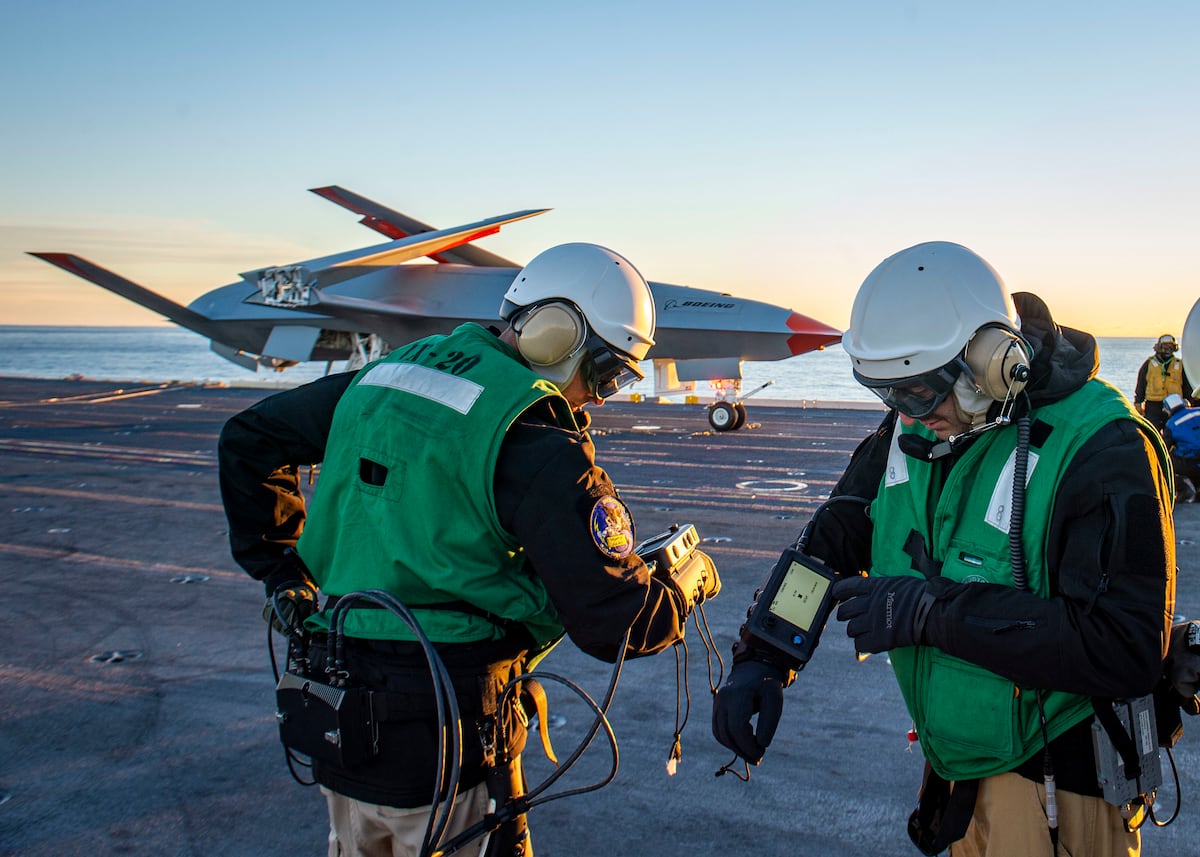
Among specific program issues, the Navy’s MQ-25 Stingray carrier-based unmanned aircraft has a 2.5-year delay to “initial operational capability and a 26-month delay to the end of initial operational testing,” GAO found. Changes to the design based on testing could push deployment out even longer.
For the DDG(X) destroyer, the Navy has yet to offer an acquisition strategy that details the assumptions behind the project.
“As such, the Navy’s business case for the DDG(X) program is not apparent,” GAO said. The DDG(X) is also likely to be affected by shipyard delays in building the Arleigh Burke-class Flight III series, which are up to 55 months behind schedule.
The Air Force’s B-52 radar modernization program, meanwhile, is beset by “cost increases and schedule delays.” The Air Force is opting to enter production with “very little development flight testing completed.”
The Army’s Mid-Range Capability program, which uses mounts Navy missiles and vertical launch tubes in Army vehicles, has “identified three additional critical technologies, all of which are immature.”
There are questions on “whether the return on investment is worthwhile for the four batteries planned for production by the Army,” the GAO stated.
Michael Peck is a correspondent for Defense News and a columnist for the Center for European Policy Analysis. He holds an M.A. in political science from Rutgers University. Find him at theuncommondefense.com. His email is [email protected].
Read the full article here
