



This week, the Pentagon published a comprehensive yet practical guide to help non-experts understand the threat drones pose as well as ways to avoid and prevent attacks.
Brig. Gen. Matthew Ross, the director of the Joint Interagency Task Force 401, the Defense Department’s lead organization for countering drones, described the handbook as “not a technical manual or detailed set of rules” but rather “a common foundation to shape our collective approach to this challenge.”
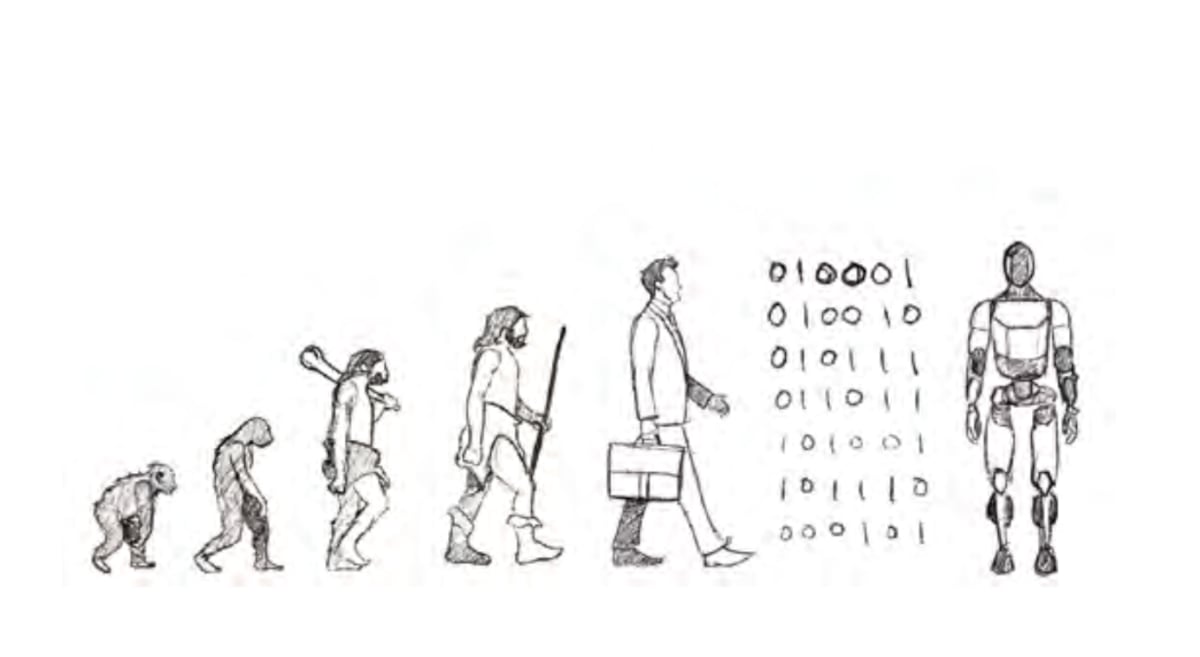
Using conversational language, freehand sketches and relatable references, Small Drones, Big Problems: A First Principles Approach to Countering-UAS makes the information approachable.
Inside, the handbook introduces the concepts of drones and drone protections. It offers guidance such as “The Four Ps of Drone Threats” and “The Five Ds of Protecting Against Drones,” as well as simple definitions of technical concepts and procedures.
But more importantly, it offers a perspective.
In the opening chapter, the handbook shares a brief anecdote from 1939 about the “happy time” for Nazi Germany because Allied Forces did not yet know how to react to U-boat operations.
“But the ‘happy time’ didn’t last forever,” the handbook reads. “British and American ships learned to adapt to the threat by implementing a convoy system to protect shipping lines, using escort ships, and developing new technologies like sonar, radar, and depth charges.”
The handbook grounds the subject for drone threats, explaining that technology in warfare has always changed, but weapons and equipment don’t win wars alone.
“Learning militaries adapt and innovate, repurposing existing defenses and building new ones to address vulnerabilities exploited by drones,” the handbook reads. “They change how they think about drones and how they fight.”
While a majority of the 100 pages is dedicated to applying tips and techniques to prevent or avoid drone attacks, it also offers a perspective on artificial intelligence, or AI.
“There is a temptation to talk about AI as either a savior or a threat, either a magical solution that fixes everything or a frightening force that removes human control. Neither description is useful. In practice, AI is far more neutral than either of these extreme perspectives suggest,” the handbook reads.
The handbook describes AI as a tool meant for helping analyze data by recognizing patterns and making predictions to assist humans in decision making.
“It does not replace judgment and disciplined decision-making. It does not understand intent or consequences. It does not decide what matters. What it does well is sort, compare, correlate, and highlight signals that would otherwise be lost in the noise,” the handbook reads.
The handbook argues that AI tools can be used for “helping humans apply the principles of detection, denial, disruption, defeat, and discipline more effectively.”
“When protecting against drones, AI is not only useful in moments of crisis, when stress is high in a (Base Defense Operations Center) or when a patrol is already reacting. Its value extends across the entire protection challenge, long before a drone poses a threat,” the handbook reads.
Army Maj. Joe Amoroso, deputy chief of strategic initiatives for JIATF 401, said the handbook offers “vital first principles” to help in “countering the defining threat of our time.”
“It is crucial to build a common foundation for counter-drone efforts as we work with the entire government and interagency partners to respond to this growing threat,” he said.
Daniel Terrill is a contributor to Military Times. He’s been reporting on military issues, the gun industry, and the outdoors for nearly two decades. Although writing is his passion, he’s been a Marine, police officer, and, perhaps the most dangerous job of his career, a substitute teacher.
Read the full article here
