


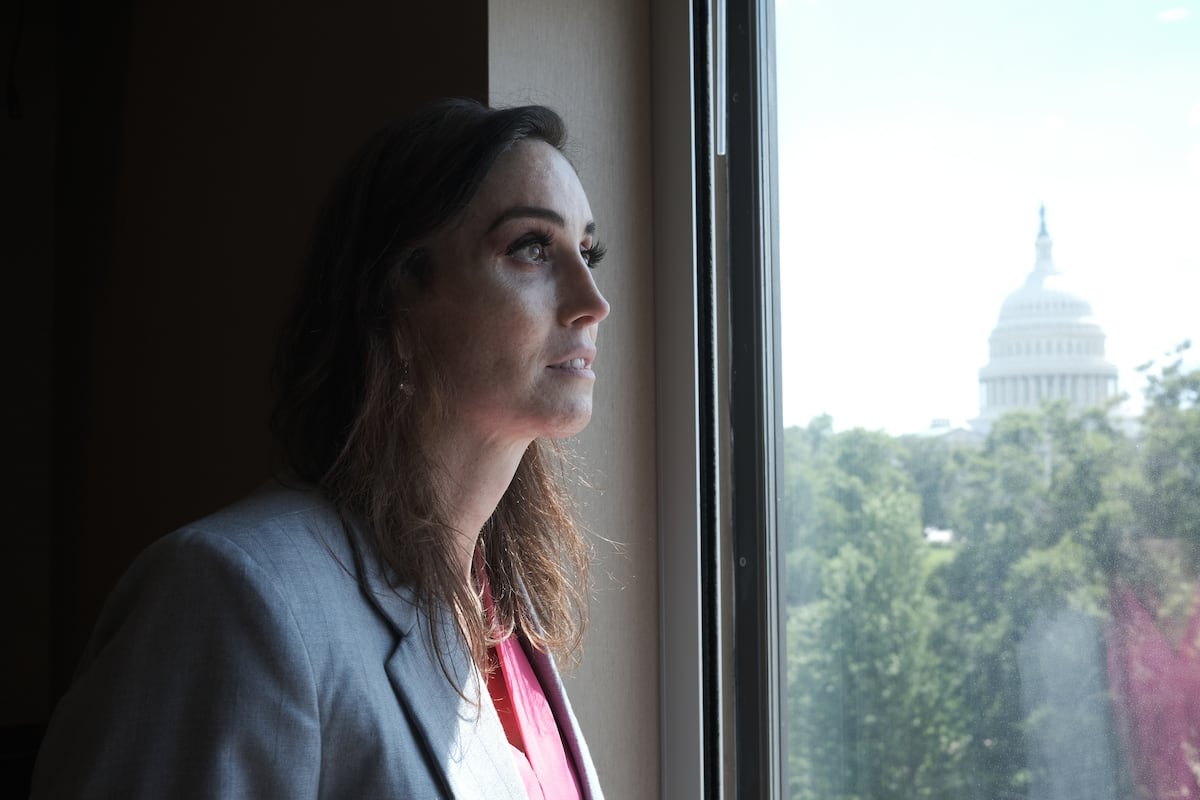

Transgender service members are on the precipice of being allowed back into the military after a federal court ruled that the Trump administration’s ban against them was unlawful.
As troops look toward a future when their service might be welcome once again, individuals affected by the policy told Military Times that the year and a half time period upended their lives.
The U.S. Court of Appeals for the D.C. Circuit said in a June 1 ruling regarding Talbott v. USA that the Pentagon’s transgender military ban was unconstitutional and that the 30 enlisted plaintiffs involved in the case could continue to serve.
That ruling, which upheld an earlier preliminary injunction and is set to go into effect July 16, applied only to those plaintiffs.
Shortly after, on July 1, the U.S. District Court for the District of Columbia granted a motion to certify Talbott v. USA as a class action lawsuit, meaning the protections would extend to all transgender service members enlisted in the military.
But not yet.
Before more than the 30 can rejoin, the certification must be complete and the district court must extend the preliminary injunction to the class. The timing of those actions remained uncertain Wednesday.
The U.S. government can fight the ruling and attempt to stall it by petitioning for a rehearing or asking the Supreme Court to intervene, but as of Wednesday, neither have happened.
Transgender civilians looking to enlist are still barred from joining the military.
Cast out
Though transgender troops were optimistic after the June 1 ruling about the future of their service, their path to get right back where they started — being allowed to do their jobs — was grueling.
Military Times spoke with 10 transgender service members who described how the forced separation process and the ensuing administrative leave pipeline pushed them into a perilous mental space.
With their lives on hold, these service members felt depression, anxiety and disillusionment over why an institution to which they had pledged their lives suddenly cast them out, swiftly and seemingly without regard for their psychiatric and professional well-being.
Service members also felt betrayed that the Defense Department used their “gender dysphoria” diagnosis to justify their separation. The term was assigned to service members during previous administrations as a medical diagnosis that allowed them to serve openly as transgender and receive gender affirming care.
The DoD declined in an email to Military Times to comment on the situation.
Life in limbo
In 2025, after 15 years of service, one transgender U.S. Navy lieutenant was envisioning full retirement, a deserved pension and the health benefits that came along with it.
Just five more years.
Instead, they found themselves at the psychiatric ward at Walter Reed National Military Medical Center after checking themself in for suicidal ideation, something they said was abnormal for them.
Eventually, they regained their footing, but the effects were lasting.
“My mental health has just been a dumpster fire,” said the lieutenant, who spoke on the condition of anonymity to discuss intimate psychological struggles. “This trans ban has made me a completely different person.”
President Donald Trump signed an executive order on Jan. 27, 2025, that paved the way for the ousting of any transgender service members with a history of “gender dysphoria.”
Sweeping DoD policy followed shortly thereafter, with service members given the opportunity to either apply for voluntary separation — which incentivized service members through bonus pay to leave on their own accord — or wait for likely involuntary separation through the new policy.
A Feb. 26, 2025, Pentagon memo said that troops with a history of gender dysphoria have medical, surgical and mental health constraints “incompatible with the high mental and physical standards necessary for military service.”
Service members saw it as a thinly veiled attempt to get rid of them.
Some transgender service members — the Pentagon has declined to say how many — were placed on administrative “absence,” or Permissive Temporary Assigned Duty (PTAD).
The administrative leave process, which had no precedent in the military for medical conditions, paid service members to not work and barred them from serving while they awaited their separation date.
The lieutenant was able to medically retire on May 22 after their mental health decline triggered a medical board review that deemed them eligible. They spent 16 years in the Navy, just four shy of the 20 they had aspired to serve.
Petty Officer Second Class Jaylen Joubert, a sailor who served about three years, said he was denied administrative leave altogether.
Joubert’s gender dysphoria diagnosis was given to him in October 2024, and his gender-affirming care was set to begin in February 2025. The transgender military ban executive order halted the process.
After expressing frustration to his commanding officer for being denied PTAD, he said he was involuntarily separated on April 17, 2026, due to conditions not amounting to a disability, but related to mental health and mental turmoil.
A loss of direction
Senior Master Sgt. Jamie Hash joined the military to be a part of something bigger than herself.
In 2025, with 13 years in the U.S. Air Force already under her belt, she had planned to serve at least 20 years and retire. So when Trump rolled out the ban and DoD policy ensued, she decided to reject the voluntary separation process and fight to remain.
“I don’t want to leave based on something that’s not specific to my performance or capability,” Hash said.
She has been on administrative leave since June 2025, and the leave has impacted her professional goals.
Hash had been awarded a prestigious three-year legislative fellowship in summer 2024 that allowed her to work as a liaison between the Defense Department and Congress, but the opportunity was jeopardized with the ban.
Though technically enrolled in the fellowship program, she wasn’t allowed to show up and take advantage of any its resources or perform any duties during her forced leave.
This loss of direction and purpose was commonplace for many.
For Master Sgt. Sabrina Bruce, who served in the Air Force for eight years and the Space Force for four, the military provided a second lease on life, as well as a support network that made her feel whole.
She’d realized her worth. But now that community was gone.
“Joining the military was the best thing that ever happened to me,” said Bruce. “Before the military, no one saw potential in me.”
Depression and suicidal thoughts plagued her for several months during the administrative leave process, which finally ended in December 2025 when she officially voluntarily separated.
Army Maj. Erica Vandal, who separated on Jan. 1, after nearly 15 years of service, described the administrative leave process as a “state of limbo.”
Vandal said she was still figuring out who she was as a person outside of the military. She was currently filling the void with advocacy work, she said, and continuing to search for something that fulfilled a sense of purpose similar to what the military offered.
Nicolas Talbott, the lead plaintiff in Talbott v. USA — the high-profile case challenging the ban — joined the Army National Guard in March 2024 and commissioned as a second lieutenant.

It took him nearly a decade to enlist after legal battles and the shifting policies of different presidential administrations, including both of Trump’s.
Talbott told Military Times that serving his country was the best job he’d ever had, combining every field of study he was passionate about: national security, counter terrorism and high-stakes environments that require precise decisions.
But after serving less than one year, his future in the military was once again cast into doubt.
“Stuck in a constant state of limbo has become the norm for me,” Talbott said.
The process wasn’t only grating for his mental health, but difficult for those around him too, including family members. They’d witnessed him work hard for everything he’d gotten, and then they watched as he found himself in what they viewed as an unfair situation.
Grooming, uniform standards
Several service members described administrative leaves and separation processes that felt designed to disrespect and humiliate them, as it barred them from donning the uniform they’d worn since their transitions.
The military made them adhere to the grooming standards of their gender assigned at birth during retirement ceremonies and graduations from prestigious military schools, they said.
U.S. Army Col. Bree Fram officially retired on Dec. 31, 2025, after serving for nearly 23 years. She opted to voluntarily separate once she realized the Trump administration would no longer allow her to serve.
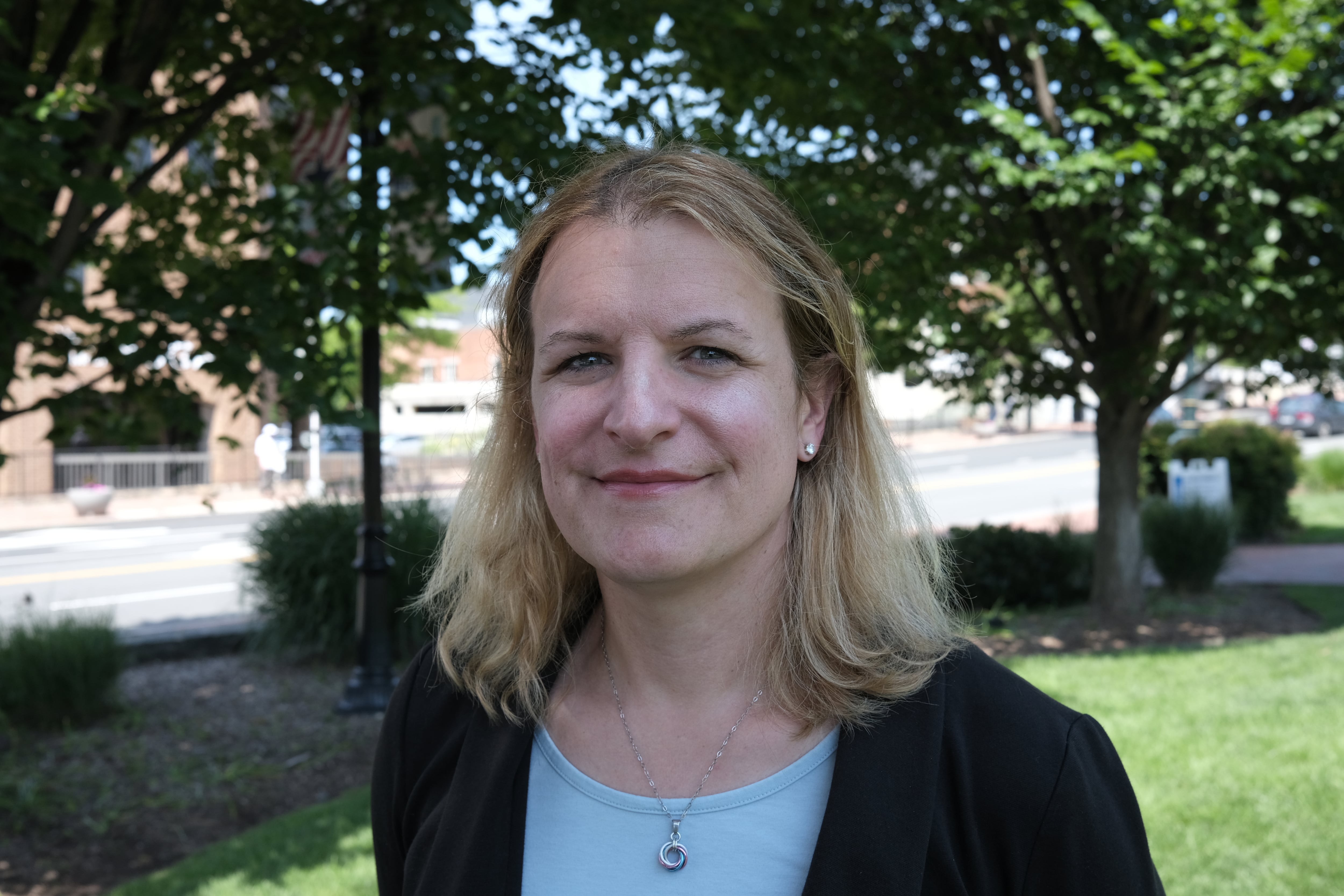
Fram was the first openly serving transgender service member to be promoted to the rank of colonel. Despite the momentous achievement, she wasn’t allowed to wear her uniform during her retirement ceremony on Jan. 8, 2026.
Inexplicably, the DoD changed her military records on Dec. 1, 2025, to reflect her gender assigned at birth, not her actual gender, Fram said. Had she walked across the stage in the female uniform she’d been wearing for years, she would’ve been brought up on charges because it would now violate Uniform Code of Military Justice regulations barring opposite-gender uniforms.
Instead, she wore a business suit.
“These were the uniforms that we bled into, that we sweat into, that we were denied even that small dignity of wearing,” Fram said.
Her service dress uniform and boots were placed on a table off to the side as she walked across the stage.
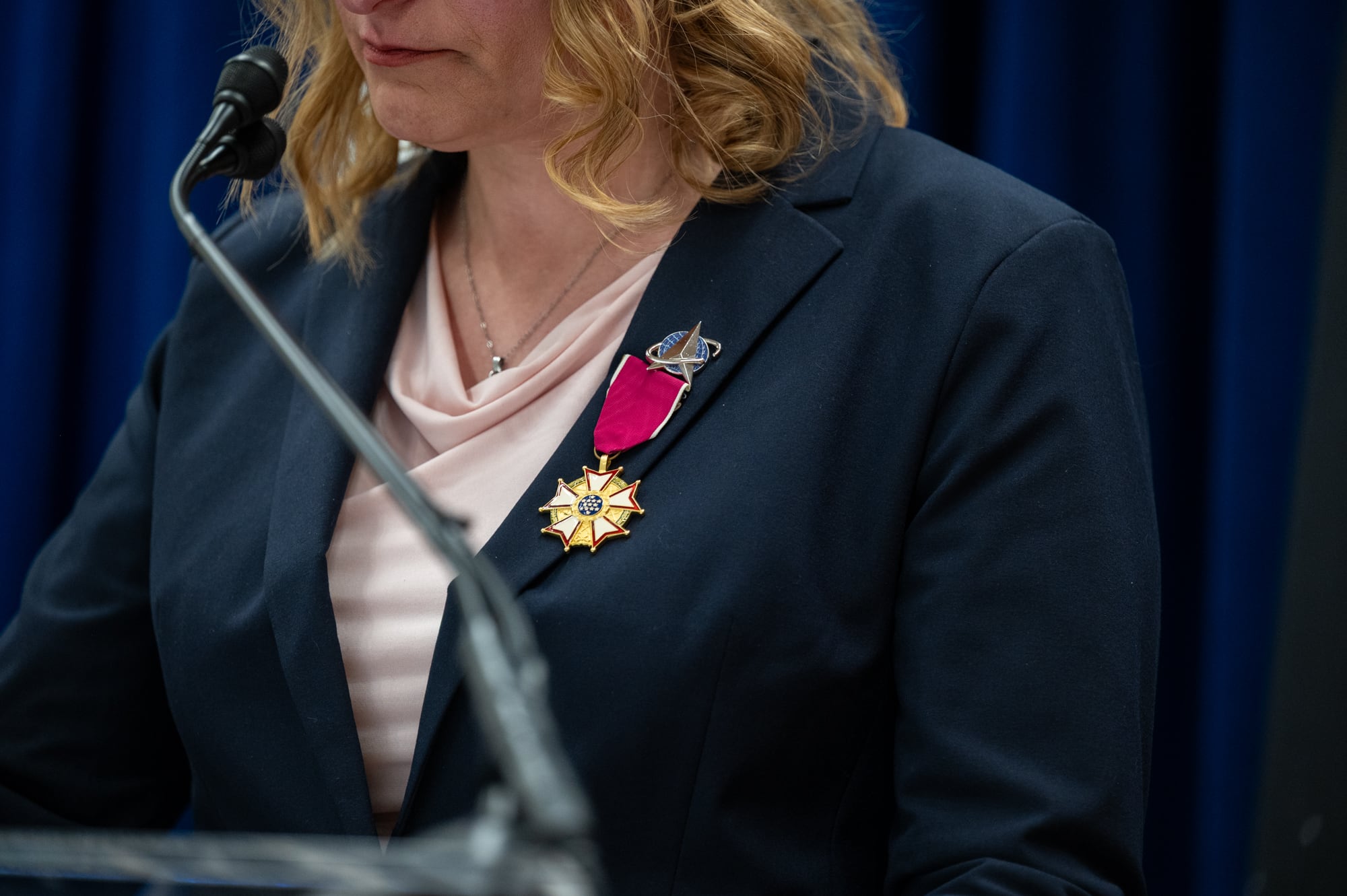
About two weeks before her gender was denied publicly, she dealt with what she said was another slight. She was summoned to the Pentagon by a lieutenant general deputy chief of space operations.
In the meeting, which lasted 15 minutes, the lieutenant general told Fram that the official support she’d requested for her retirement ceremony — which included an honor guard and a band, both very common for ceremonies — would not be granted because there were concerns it would have the appearance of being political.
The officer then reminded Fram that she was still subject to the Uniform Code of Military Justice, which Fram found unusual.
“I took this very much as a warning or a veiled threat, to be be silent, to not talk about these things,” Fram said.
Army Infantry Major Kara Corcoran has served for over 18 years and is currently involved in the involuntary separation process.
In May 2025, she graduated from the School of Advanced Military Studies after completing an esteemed one-year master’s degree program that trained her to become an operational planner.
But she was informed by her chain of command that senior leadership had prohibited her from crossing the stage with her peers during graduation unless she adhered to male regulations and standards, in keeping with the new DoD policy.
“Cruelty was the point,” Corcoran said of the rule.
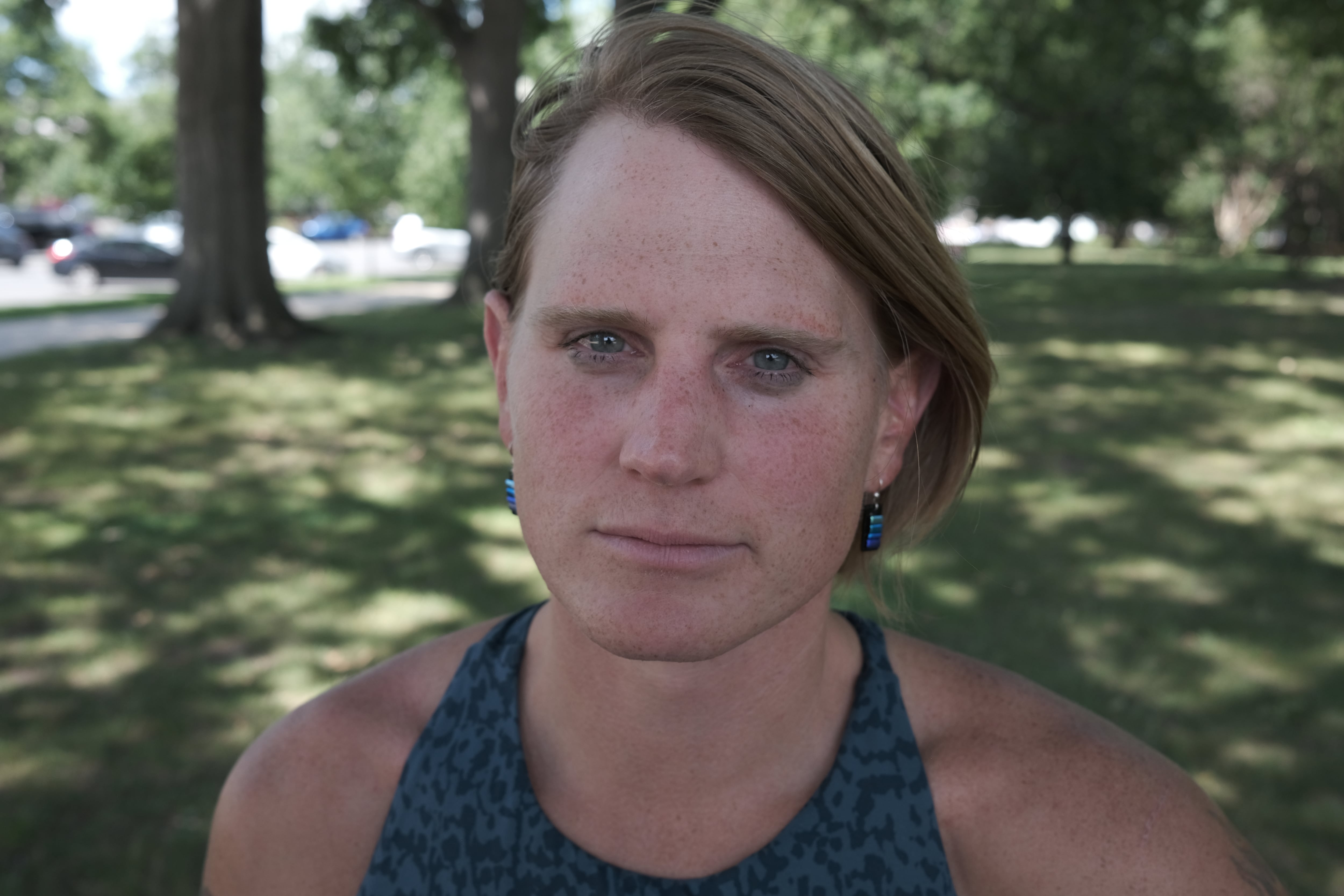
She was given an option to have a separate ceremony, or just be given her diploma instead.
She borrowed an old friend’s male uniform, cut her long hair into a pixie cut the day before the graduation ceremony and walked across the stage.
“You’re not gonna take away something I’ve earned,” Corcoran said. “If you think that cutting my hair is going to affect my identity, you don’t understand the strength and resilience of transgender service members.”
Bait and switch
Nearly all of the transgender service members who spoke to Military Times transitioned after joining the military, but in order to begin gender affirming care, they had to receive a diagnosis of “gender dysphoria” from a doctor.
Gender dysphoria is defined by the Mayo Clinic as a “feeling of distress that can happen when a person’s gender identity differs from the sex assigned at birth.” But the clinic also notes that while some transgender people experience gender dysphoria, others feel comfortable with their bodies and gender identities.
“Not all transgender or gender diverse people experience gender dysphoria,” the clinic says.
The diagnosis was now being used to cast out transgender troops.
Many of the service members who spoke to Military Times said they either never had gender dysphoria but agreed to the diagnosis as a way to receive gender-affirming care, or they had experienced the feeling in the past but had not after transitioning.
Using the diagnosis against them was an unfair bait and switch, many said.
Staff Sgt. Athena N. Knight served in the U.S. Marine Corps for 14 years and opted for voluntary separation. She was honorably discharged on June 30, 2026.
Knight said she never had clinical gender dysphoria and didn’t meet the criteria for the ban.
“I don’t have gender dysphoria, I’m just transgender,” Knight said.
She was given the diagnosis under Defense Department Instruction 1300.28 “In-Service Transition for Transgender Service Members,” but explained it was because it provided the only path to receive necessary gender-affirming care.
The difference was similar to the distinction between someone being depressed and clinically depressed, Knight said. They’re not the same.
Someone could experience symptoms of gender dysphoria and not have clinical gender dysphoria.
Using gender dysphoria to expel someone from the military not only confused the service members it affected, but it also didn’t make sense legally, advocates said.
“There’s not one other medical condition that results in automatic discharge from the military,” said Shannon Minter, who works for the National Center for Lesbian Rights and is the lead attorney in the Talbott v. USA case.
Master Sgt. Logan Ireland, who’s served for 15 years in the Air Force, said he’s never felt dysphoric about his gender.
But based off DoD policy under the Trump administration, he faced separation despite wanting to continue serving.
Ireland initially applied for retirement after the Air Force extended the possibility of early retirement for transgender service members with 15 to 18 years of service.
He received retirement orders from the Air Force in June. But then, several months later, the Air Force issued a memorandum saying his application for early retirement was denied. Voluntary separation was offered, but Ireland didn’t want it at that point.
He is suing the Trump administration with other service members from the Air Force and Space Force over what they say is a loss of early retirement benefits.
“I had to get the diagnosis of gender dysphoria in order to continue serving in the military authentically as male,” Ireland said. “So for me it was a checkbox.”
Even though he had the diagnosis, it was easily curable through hormones and living as his authentic self, which he said he was doing.
“I’m a male,” Ireland said. “I live happily, healthfully as a male. There’s zero issue with me having a gender dysphoria diagnosis in a past medical history, because it’s already been corrected.”
Question of return
The Talbott v. USA ruling is set to go into effect Thursday, but if the class action is certified, it remains unclear what the protections mean for service members who voluntarily separated but want to return now that the ban was ruled unconstitutional.
Regardless, transgender troops have expressed mixed feelings about returning to an organization that rejected their service to their country.
“I don’t think I’ll get back in uniform unless something drastic happens,” Knight said.
She expressed concern about having to return the money she was given by the military as an incentive to voluntarily separate. She also wasn’t sure about going through a potentially complicated reenlistment procedure, given the disability rating she received upon exiting the service.
The Navy lieutenant who sought help at Walter Reed said they didn’t want to rejoin the military after it turned its back on them. But at the same time, serving another four years would get them to 20 and allow them to receive a significant upgrade in retirement benefits.
As of last week, they were considering all their options.
Corcoran was unequivocal in her commitment to returning — if given the chance.
“I want to finish out my 20 years and do my job, and be able to be a productive teammate,” Corcoran said. “The whole point of why I joined the military was to serve my country.”
Riley Ceder is a reporter at Military Times, where he covers breaking news, criminal justice, investigations, and cyber. He previously worked as an investigative practicum student at The Washington Post, where he contributed to the Abused by the Badge investigation.
Read the full article here
